Did you ever wonder about that after a good trip in the hunters or equitation, only to leave disappointed when the class was pinned?
While it’s not a mystery, there’s no simple answer to the question about how placings are decided. Judging takes a host of factors into consideration. The complexity involves far more layers than many might realize, whether they are a rider, trainer, horse owner, parent or even a spectator wondering what’s going on.
The process is demystified in “Judging Hunters and Equitation,” a beautifully put-together book so authoritative it often is used as a text at colleges offering equine studies programs.
Now in the second edition, it should be required reading for anyone who hopes to show successfully. The mystery can be replaced with insight for those willing to make an in-depth exploration of what the judges look for when evaluating competitors and their horses.
Written by U.S. Equestrian Federation judges Julie Winkel and Tricia Booker, the volume offers information on far more than the judging criteria, though that is explained in great detail.
It starts with the basics, building the foundation for performance.
The look of the ideal show horse and its attributes are described as a useful guide to choosing a mount. From the pony, junior and amateur ranks to side-saddle and the professional sections, the authors detail advice not only about the traits it takes to succeed, but also how to choose the appropriate level of competition for horse and rider.
Tack, equipment and turnout necessary for show readiness all get their due, along with a discussion of strategy, which is as important as a good bascule or a braided mane. Then there’s a list of judges’ pet peeves — dirty boots and too-short hunt coats among them — as well how to become a judge, if a reader is interested in exploring that option.
There are plenty of details about judges’ perspectives and the way they mark their cards during a class. Although the live-stream era means people can see top competitions on their phones, Tricia pointed out they do not watch a class from the same vantagepoint as a judge. So the casual observer’s conclusion can differ from that of the official being paid to sort the entries.
She explained, “a score on any given day is not a standard score; it’s in comparison to the rest of the class. Your amazing and awesome trip could be a 90 one day at one show, and an 85 on another day at another show, because you’re coming into the ring and competing against different horses over another course on another day. It’s really not about the scores, it’s about where you place in the class.”
You may not have known that, or hundreds of other things you can learn from this book. Readers will better understand judges after gleaning information cover to cover. But there’s more to making decisions than that for hard-working officials.
As Julie noted, “Judging requires good judgment and a strong opinion that you aren’t afraid of sharing.”
Iconic Valiente Polo Farm, regarded globally as the most renowned and accomplished polo facility of the modern era, is being offered for sale for the first time in its extraordinary history.
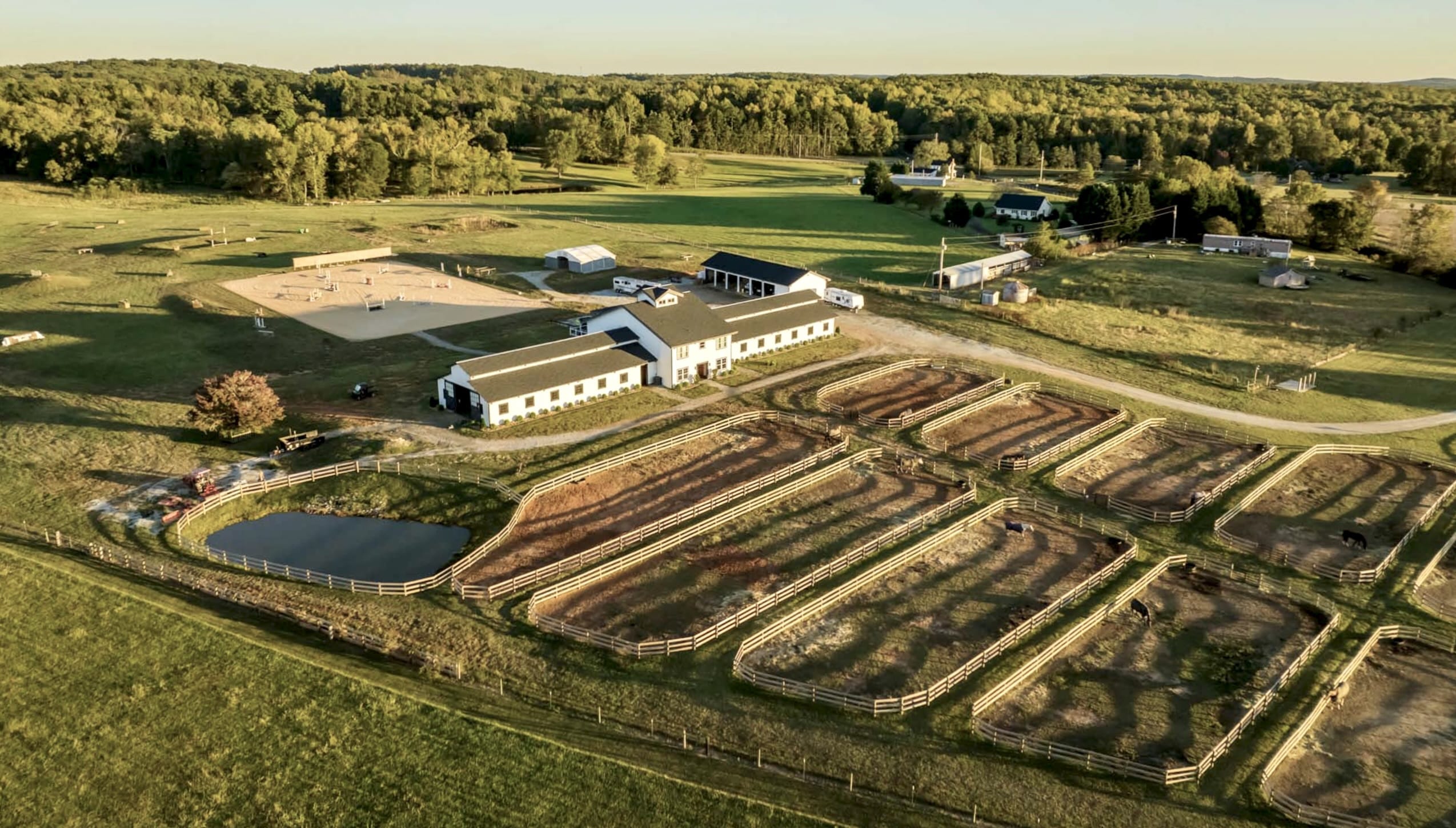
Set across approximately 150 acres of pristine, private, and immaculately manicured land in Wellington, Florida, Valiente Farm is considered the most revered address within the global polo community – a place whose legacy transcends ownership and whose impact on the sport is unmatched. Four championship fields, barns, accommodations and infrastructure like no other.
“Valiente Farm is hallowed ground, and no matter its future owner or its future use, it will always be hallowed ground in the world of Polo.” – Icon Global Founder, Bernard Uechtritz.
Conceived through the passion, vision, and lifelong commitment of Robert (Bob) Jornayvaz, Valiente Farm represents a singular achievement in equestrian sport, design, and operational excellence. Jornayvaz assembled world-class architects, designers, horsemen, and management teams to build not only the iconic Valiente complex, barns, entertainment and hospitality infrastructure and its championship fields, but an entire ecosystem that redefined what was possible in polo
.
Valiente fields became the foundation for unprecedented global, competitive team success, while simultaneously serving as a platform for generations of aspiring professionals and amateur players. Through collaboration with the legendary G.O.A.T, Adolfo Cambiaso, and his La Dolfina bloodlines, together with the Jornayvaz family’s J5 Equestrian breeding operation, managed for decades by Roberto Zedda, Valiente evolved into the most successful and comprehensive polo enterprise in the sport’s history. Winning teams with winning horses that literally changed the game, while conquering the most coveted tournaments, winning polo championships the world over, including multiple US OPEN titles.
From its earliest days – when the land was still an orange grove – Valiente Farm was envisioned as more than a polo facility. Jornayvaz designed the property with future flexibility in mind: engineering an intricate yet simple sports complex capable of evolving acrossdecades, disciplines, use and development opportunities.
At the vortex of the world’s most prestigious and expensively built equestrian estates and competition venues within the Golden Triangle of Wellington, Valiente Farm offers unparalleled value and versatility of use. The property can host multiple concurrent events and lends itself to a wide range of uses, including polo, show jumping, dressage, reining, cutting, or conversion into a private multi-estate enclave or venue of any kind. Such adaptability was always central to its design.
Comparable opportunities are nonexistent. The most recent sale of similar size and use of significance includes the 2022 National Polo Center and Isla Carol transactions, which together, traded for approximately $150M. The site of the Winter Equestrian Festival showgrounds is also comparable in size.
Valiente Farm, on every level – privacy, tranquility, flexibility, and ambience stands apart. Truly One of One. A rare opportunity for new stewards to continue their own vision and build upon one of the greatest dreams ever realized in sport.
About Valiente
As of February 2026, Valiente remains one of the most successful organizations in high-goal polo, most recently securing the 2024 C.V. Whitney Cup title, the sixth title for Valiente, retained back-to-back. Historically, the team is most noted for its dominance in the Gauntlet of Polo and the U.S. Open Polo Championship having won the latter in 2015 and 2017, while finalists in 2024, they lost, narrowly, to La Dolfina 10-7. Valiente is a 5-time winner of the USPA Gold Cup, 2-time winner of the World Polo League All-Star Challenge (2019 and 2020) and swept all three major 26-goal tournaments of the Triple Crown of Polo (US), in one season.
About Icon Global
Icon Global designs and implements strategic, tactical, national and global marketing campaigns for Iconic real estate, and additionally provides specialty advisory and portfolio services for owners of unique assets across the USA, parts of Europe, the Middle East and Asia. Icon represents banking and governmental institutions, and high net worth individuals’, as well as corporations and family offices globally, in the acquisition, management and disposition of property in all asset classes. Icon Global was founded by complex deal maker and International real estate advisor, Bernard Uechtritz.
Others build it, piece by piece, with the precision of an engineer and the heart of a visionary.
Doug Payne is both, and his journey from a New Jersey farm to the Olympic Games is a masterclass in calculated ambition, relentless partnership, and the power of never selling yourself short.
The Farm That Shaped Everything
Doug did not choose riding so much as he inherited it. Growing up on a family farm ten minutes outside of Gladstone, New Jersey, horses were simply what everyone did. His mother judged at two Olympic Games. His sister rode five-star events. By five years old, Doug was in the saddle. By ten, he was competitive. It seemed inevitable.
But inevitability can mask something more profound: a quiet determination not just to follow the path, but to redefine it.
At the Rochester Institute of Technology, Doug studied mechanical engineering with a clear plan: graduate, work as a forensic engineer, and possibly serve as an expert for the New Jersey State Police. During his internship, he completed the state police academy, excelling on every test and meeting all requirements. Doug believed his hard work had positioned him for a career in law enforcement. However, everything changed when the New Jersey state budget was put on hold.
The interim period, spent waiting for a start date that would never arrive, became a turning point in Doug’s life. With plenty of time on his hands, he began to ride his horse more and more. One day, he realized he was earning as much as he would have as a state police officer, but on horseback, doing the work he loved. The engineer’s careful plan transformed into something much bolder: he decided to become a professional rider.
Doug Payne’s Early Start
Finding the Edge
Early in his competitive career, Doug grasped a crucial insight: there would always be riders with better funding, more connected families, and greater access to elite training. To thrive and stand out, he needed to set himself apart. So, he approached this challenge like an engineer: he innovated.
When point-of-view cameras were still viewed as exotic, Doug customized a system to film eventing from horseback. He collaborated with the legendary trainer Jimmy Wofford to produce a DVD that was surprisingly successful for its time. While others relied on credentials and pedigree, Doug focused on creating visibility, demonstrating that he had more to offer than just his competitive record.
At the age of twenty-six, he obtained a judge’s license. This was another strategic move to showcase his depth of knowledge. Each of these calculated decisions built upon one another, opening new doors along the way. This pattern would define his entire career: identify gaps, address them, and then move on to the next challenge.
When a publisher approached him to expand a magazine article into a full book, Doug did not hesitate, even though his longest college paper had been only ten pages. He completed the initial draft in six weeks, but the rewrites came back filled with edits. The process was tough, but it was also transformative. The book became a valuable asset, proving his expertise in a way that competition alone could never demonstrate.
This illustrates a mentality that understands excellence is not accidental; it is carefully crafted.
Love and the Turn South
Everything shifted for Doug when he met Jessica at a Monday night bowling league in Aiken. Jessica was from Nashville, with deep roots in the South, and she had a vision for their life that extended far beyond New Jersey winters and the endless East Coast circuit.
Doug had not considered a major change like this until Jess made a compelling argument. They chose the Carolinas almost randomly, rented a place for over a year, and then decided to stay. They found their farm north of Durham, near Rougemont, where they built their operation and their life together. Doug says it was probably one of the best decisions they ever made.
However, marriage to Jessica was more than just a romantic relationship; it was a partnership that made everything they accomplished possible. Doug is clear: without her, none of what they have achieved would exist. She is his partner in crime, the anchor, and the force that holds everything together while he continues to push forward.
Today, they travel together to competitions, with their kids joining them. Abigail loves being around the horses and enjoying the treats as she walks through the barns. Hudson brings his Legos and soccer cleats. They have created a life where excellence and family coexist harmoniously, rather than being in competition with one another.
The Olympic Moment
The pinnacle of Doug’s career arrived in Tokyo. He would represent the United States at the Olympic Games on Van Diver, a horse he and owners Debbie and Kevin Crowley had developed from the ground up. This was not a borrowed horse or a quick fix; it was a partnership perfected over years of trust, training, and meticulous attention to detail.
The selection process was brutal. With only three team members and one alternate in the new Olympic format, every rider had to be absolutely reliable, capable of finishing at or near their dressage score. There was no room for disaster. Doug and Van Diver’s consistency, along with their proven track record at five-star competitions without jumping penalties, gave the selectors confidence.
However, Tokyo itself was unlike anything Doug had ever experienced. He faced daily COVID testing and was confined to the hotel. The mental burden of knowing that a single positive test could lead to his removal from competition weighed heavily on him. He had dedicated his entire life to this moment, only to have it constantly threatened by circumstances beyond his control.
Still, he rode on. When the results came in, Doug emerged as the highest-placed American. While it was not the gold medal he had dreamed of, it was a profound moment nonetheless, a validation that when the stakes are highest and the pressure is greatest, he rises to meet the challenge.
Afterward, Debbie and Kevin created a shadow box filled with bridle numbers, shoes, and photographs, which now sits in his home. It is his most treasured possession, not because it signifies a gold medal, but because it represents a journey, a partnership, and a moment when everything aligned.
Character Beyond Competition
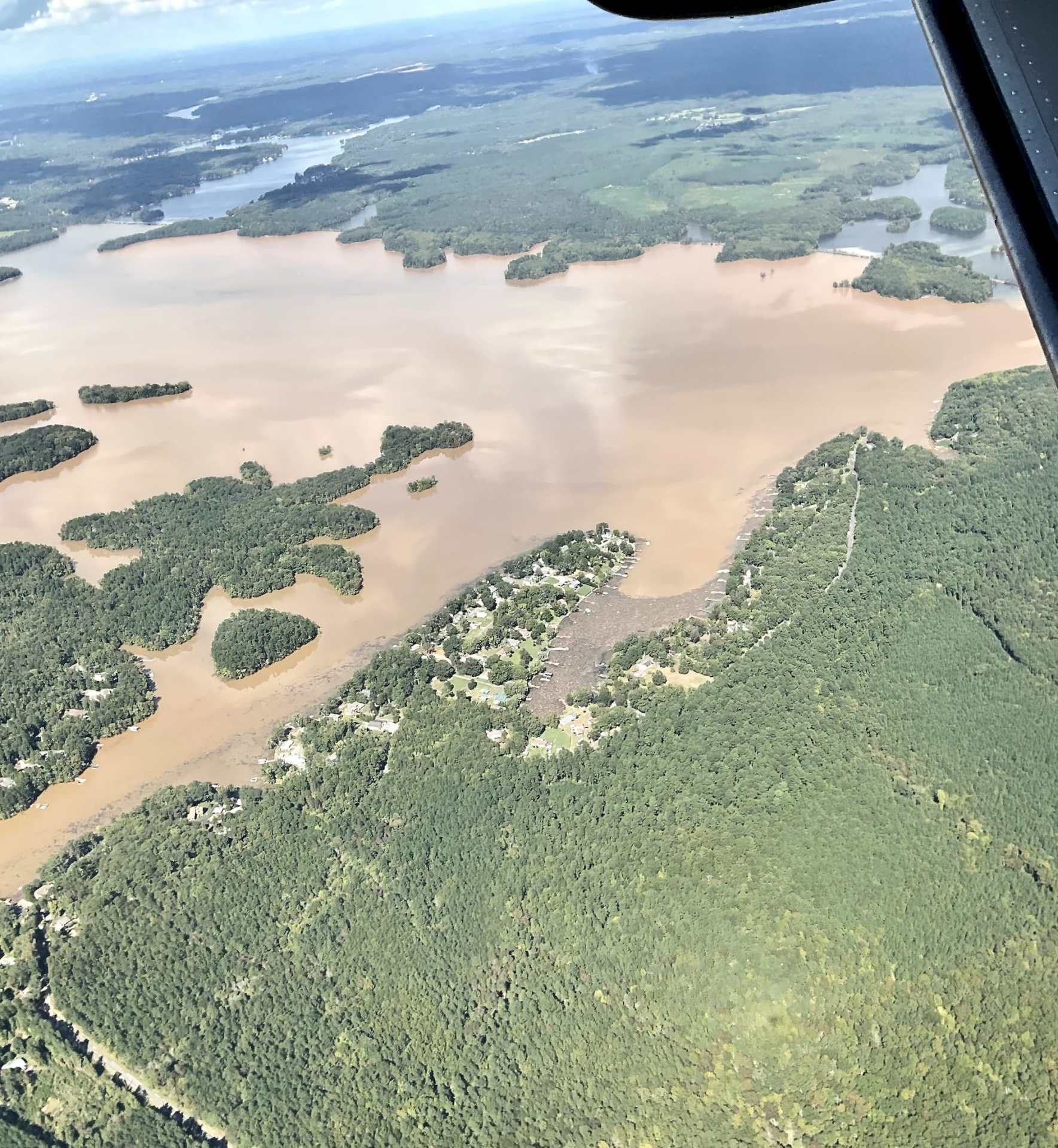
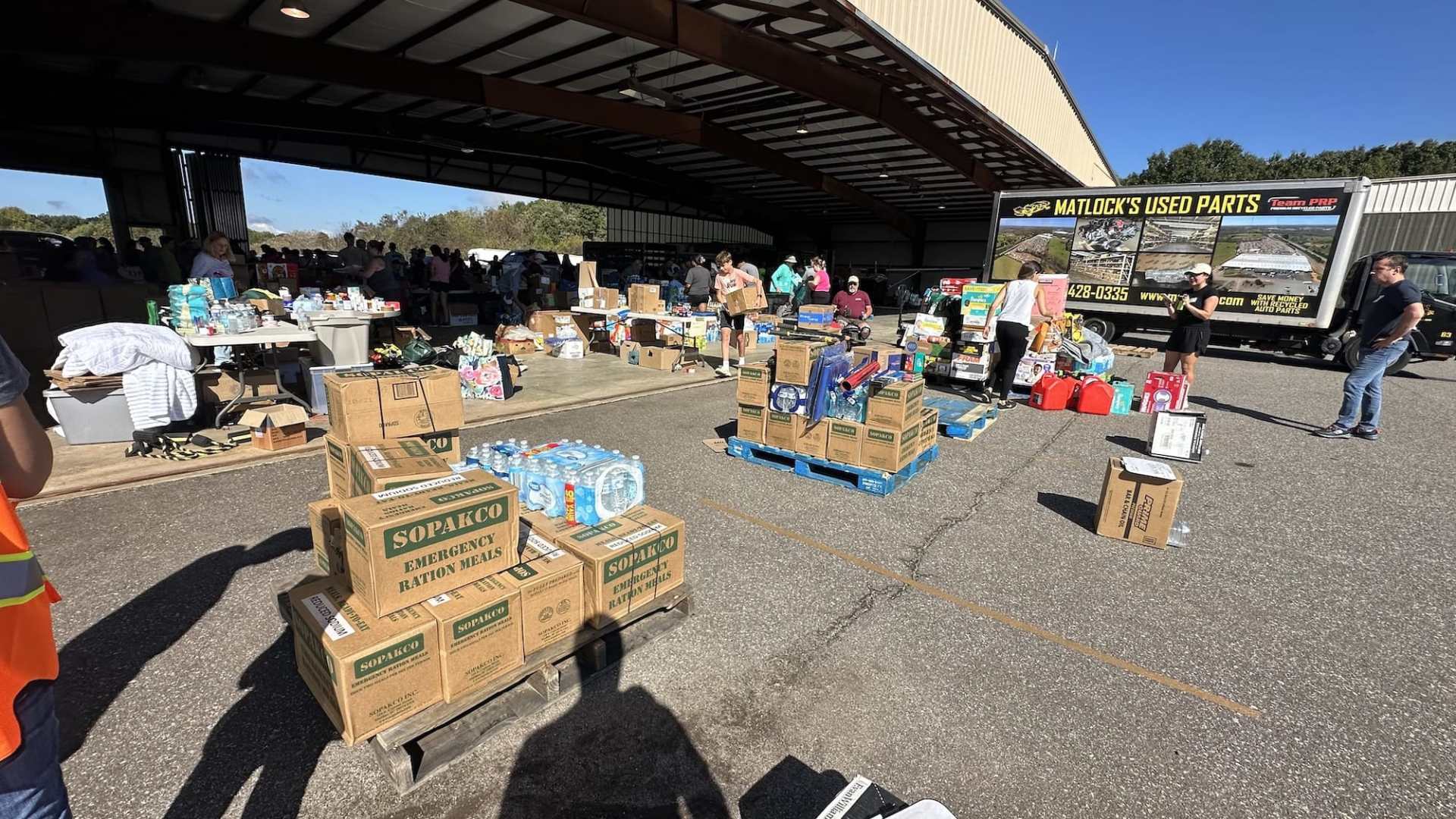
Doug was not only excelling in sports; he was also making a difference in times of crisis. When Hurricane Helene devastated the Carolinas, he quickly took to the skies again, this time not for competition. A friend with a Kodiak turboprop reached out, asking for help with relief flights. Doug joined the effort, completing seven flights that day. He coordinated with volunteers who weighed supplies, calculated loads, and identified small airports that could still receive aircraft.
During his efforts, they learned of a farm with twenty horses stranded without feed, hay, or any way to reach food because the bridge was gone. Doug flew to Southern Pines, loaded eighteen bales of hay, and worked with a skydiving plane to drop the supplies from above. The first two bales mistakenly landed in the river, but after that, they corrected their aim, and the horses received the food they desperately needed.
This is who Doug is: capable in ways that constantly expand, willing to be of service, and always ready to help.
The Unexpected Pivot
Here is where Doug’s competitive journey takes another turn. After twenty years in three-day eventing and international competition, a sport that has significantly shaped him, a gradual shift began.
A horse named Quintessence came into his life for eventing. However, the horse’s natural instincts and unique talent for careful jumping did not align with the endurance requirements of eventing. Fortunately, the owner, Jane Dudinsky, was open to the idea of transitioning him to show jumping instead. Quintessence went on to win the six and seven-year-old finals and later competed in Grand Prix events.
This experience planted a seed of change for Doug. With children now traveling alongside him, committing to forty to forty-five weeks on the road became unsustainable. The situation began to shift. Jumping offered more flexibility, reduced travel demands, and similar financial opportunities. The pressures of competing were now concentrated into the ring, rather than spread out across a triathlon of disciplines.
As he often does, Doug recalibrated and approached this new challenge with full intensity. He refused to be seen as an outsider or as a former eventer simply dabbling in jumping. He aimed to be proficient, competitive, and excellent.
He is almost there. That slight chip on his shoulder, the feeling that he is not quite good enough yet, is what drives him forward. This hunger is what makes his story so compelling to watch.
The Philosophy That Changes Everything
When you ask Doug what makes him laugh, he will tell you it is sarcasm and directness. If you ask what angers him, he will respond with frustration toward people who are not straightforward, those who hedge or deceive. In both horses and life, he prefers hard truths over gentle lies.
Doug’s advice to young people is simple yet profound: “Never sell yourself short, and do not be afraid to share your big ambitions.” He explains that when people know your goals, even if they seem outrageous, they are more likely to help you. Their networks will open up, and their knowledge will be shared with you. However, if you keep your ambitions private and safe, you miss out on the help that could have been yours.
This reflects the mindset of someone who has strategically built his life and learned that visibility and clarity can exponentially increase opportunities. His personal motto summarizes this belief perfectly: “What does not kill you will only make you stronger.”
What Comes Next
Doug still trains dozens of horses. He runs a facility with his wife. He manages clients, oversees young talent, and develops the next generation. He is building young jumping prospects for a future team. The horizon keeps expanding.
When asked about his biggest challenge, he does not cite technique, time, or even talent. Instead, it is finding and developing exceptional horses. The financial commitment involved is substantial, and even with the right resources, the perfect partner horse is a rare find. Establishing the partnerships needed to support this journey and reach the highest levels again is a puzzle that remains to be solved.
Doug has spent his entire life solving puzzles. He is an engineer who became an Olympic athlete, an eventer who transitioned to jumping, and a rider who evolved into a writer, a judge, a pilot, and a mentor. He is a farm kid who trusted his instincts when everything logical suggested otherwise.
And he is not finished yet, not by a long shot.
Watch His Full Story
Doug Payne’s journey is about more than competition. It is about partnership, resilience, calculated risk, and the power of never settling for anything less than excellence. It is about building a life where ambition and family thrive together. It is about understanding that your biggest limitation is often how loudly you speak your goals.
Discover the whole conversation and witness the moments that shaped Doug Payne. Listen as he reveals what it truly takes to represent your country at the Olympic Games, how he navigated a career pivot, why he has a passion for flying planes and playing polo, and what exciting ventures he is planning next.
It’s a tradition that began when Jacqueline Kennedy, the charismatic former First Lady of the U.S., would ride out with New Jersey’s Essex Foxhounds on Thanksgiving. The interest in her and her family was intense. As one Essex veteran told me, “photographers were hanging from the trees” when she appeared on the scene.
Jacqueline Kennedy Onassis at the Essex Foxhounds’ Thanksgiving hunt during the early 1980s.. To the left in black is her son, John F. Kennedy Jr. (Photo by Nancy Jaffer)
Word got around. Eager to catch a glimpse of Jackie, people started coming to the Thanksgiving hunt to gawk. While Jackie stopped riding with Essex decades ago and died in 1994, the custom continues.
Today, as always, hundreds converged on the elegant Ellistan estate in Peapack, N.J., to watch the hunt gather before it headed out across the green fields of Somerset County.
The scene at Ellistan on Thanksgiving 2017. (Photo by Nancy Jaffer)
Those who come to the property take photos and videos, tailgate, toss a football and generally enjoy an hour or two out in the country before heading off to their dinner.
Tailgating on Thanksgiving at Ellistan. (Photo by Lawrence J. Nagy)
Some have never been close to a horse, and are fascinated by watching sleek mounts and their well-turned out riders.
Eager kids reach out to touch a horse. (Photo by Nancy Jaffer)
For horse-savvy locals, it’s a time to see old friends, chat with pillars of the equestrian community and discuss who’s riding which horse.
It’s also a time to appreciate open space in the most densely populated state in the union. Essex is part of the community, an example of countryside sport, and how closely riding and horses are involved with land preservation.
Taking a fence on Thanksgiving.
Drs. Brendan Furlong and Wendy Leitch. (Photo by Nancy Jaffer)
Essex Foxhounds Committee Chairman Sally Ike and Treasurer Jim Gordon. (Photo by Nancy Jaffer)
The Johnson family had a smart turnout as the hunt gathered. (Photo by Nancy Jaffer)
Huntsman Bart Poole and the hounds.
A side-saddle rider adds a touch of elegance to the hunt field.
Colton McGregor and Brookside Pink Magnum. (Photo courtesy of Becky McGregor)
How do you get more people involved in equestrian competition, in order to grow the sport? There’s always lots of talk about that, often without much of a conclusion. The U.S. Equestrian Federation has been trying to figure it out for years, and the U.S. Hunter Jumper Association is working on a solution after a report revealed just 1 percent growth in nine years.
There are a huge number of people out there who like horses and find them appealing, but only a small fraction of those actually ride, and even less compete. Discussion of the “grass roots” usually centers on showing opportunities at the lower levels. Equestrian organizations, perhaps understandably, tend to focus on people who already are in the sport and paying dues, rather than drawing newcomers into it.
So how do you reach people who aren’t involved at all and may never even have touched a horse? Breyer Animal Creations–you know those collectable models–has a concept, and will put it into action June 18 from 10 a.m.-4 p.m. at the U.S. Equestrian Team Foundation’s Gladstone headquarters.
It’s hosting an intriguing initiative, Pony Up!®. The idea is to introduce children under age 16 to the world of horses, from models to real animals. It’s a hands-on experience that also includes crafts. Each person attending will go home with a model, and perhaps a desire to spend more time with real horses.
Pony Up!® will be an especially welcome opportunity for those who would like to go to Breyerfest, the big three-day model horse extravaganza held each summer at the Kentucky Horse Park, but don’t have the time to go, or resources to cover air fare and hotel rooms.
It will feature “many of the same things people like about Breyerfest. If we’re satisfied it can be a success, we can roll it out to other places in the country,” said Kathy Fallon, a vice president of Reeves International, which owns Breyer.
“We wanted to test our idea at a place local to us,” said Kathy, referring to the fact that Reeves is in Pequannock, Morris County, about 40 minutes from Gladstone. Even more important, the USET’s charm and history make it a good showcase.
For children who have never encountered horses, this is an opportunity to see and touch them, as well as take pony rides (Children who wish to ride should wear long pants and lace-up shoes.) The event might be the first step in equestrian involvement that could lead to trail rides, showing, gymkhanas and many other activities.
The Breyer model of Brookside Pink Magnum. (Photo courtesy of Breyer)
“What is the one thing different about Breyerfest?” Kathy asked, answering her question this way: “It’s the opportunity to be up close and personal, meet horses and their riders and talk to them when they have time to talk to you. At a horse show, people are busy competing, they’ve worked really hard, they don’t have time to be welcoming to a family that wanders in and says, `Gosh, what’s going on here. My little girl loves horses. Maybe she’d like to do it.”
After experiencing a casual and relaxed atmosphere at Breyerfest, “parents say, `Maybe we’ll let the kids ride now.’ The horse industry really needs to look to the parents,” Kathy commented, noting, however, commitments to soccer and other sports is a “huge barrier.
Yet she believes, “The more parents get the message about how terrific it is to be involved with horses and horse sports and what a great thing it is to teach the kids compassion and caring for other creatures, the more they’ll be willing to dedicate the time” it takes to keep the children involved with horses.
Featured equine guests at the USET will be two inspirations for Breyer models, Arabian superstar Oration from the Desiderio family’s Tranquillity Farm in Chester and Rebedon Farm’s Brookside Pink Magnum, a strawberry roan Welsh stallion with a solid disposition who lives in the backyard of trainer Becky McGregor in Harmony, Warren County.
Although Magnum’s model is still available, Oration’s model already has been retired, since it was a special run made only for Breyerfest. The highest-priced discontinued model, in case you were wondering, is the Andalusian Alborozo, whose likeness was cast for the 2008 Breyerfest. A customized model of the horse went for $13,500 at auction.
Magnum, a Canadian-bred 19-year-old, is as sweet as they come. Becky’s 2 and 1/2-year-old son, Colton, learned to walk by toddling along the fence line next to the pony. Every time, the child fell, Magnum would wait patiently for him to stand up.
“They’ve been buddies ever since,” said Becky, noting the toddler rides the stallion, whose offspring have won the USEF Pony Finals and various Welsh titles.
Oration and Michael Desiderio. (Photo courtesy of Breyer)
Having the pony become a Breyer model was a longtime dream of Becky’s late grandmother, Eileen Coyle, who used to write to Breyer regularly, asking for a model to be made of Magnum. It didn’t happen while Eileen was alive, but “On the one-year anniversary of her death was when I got the call from Breyer that they were going to make Magnum a Breyer. It was validating for me,” said Becky.
Magnum has been memorialized as a Breyer model for three years.
“It’s very surreal. He’s a little bit like a celebrity. Kids get awestruck around him,” said Becky, who noted people will stand in line for hours to see Magnum at Breyerfest.
“Then we come home and he’s my son’s pony and he lives in the backyard and he rolls in mud,” she said with a chuckle.
The Desiderios have had a similar experience with the 9-year-old stallion Oration, who has received comments of “Wow!” on judges’ cards and has won everything in the Arabian world and is a natural for open competition because he looks “like a little warmblood,” said Ricci Desiderio, whose son, Michael, rode the horse at Breyerfest.
The overwhelming reception that Oration got there demonstrates how effective it is for kids to actually meet such a special horse.
“We’ve got to start to get everybody in horses to get them started to develop them as riders. As they get more educated, they become more capable and move up the scale of riding,” said Ricci.
“You need to get them in the door to show them what we do. Marketing ourselves is a hard thing. If you don’t get them exposed to the horses, there’s no way in the world they’re going to get an interest.”
He pointed out that horses present a lifelong benefit to children who get started with riding.
Brookside Pink Magnum and fans at Breyerfest. (Photo courtesy of Breyer)
It’s a sport that doesn’t dissolve after high school,” he emphasized. Ricci tells parents that by supporting their youngsters’ equestrian involvement, “You are investing in the child’s future.” Of trainers, he says, “We’re educators.”
The Pony Up!® program will include Hamlet and Honor of Gentle Carousel Miniature Therapy Horses, autograph sessions, equine breed demonstrations and a petting zoo.
Kids will have their own jumping competitions, complete with prizes; magicians, a craft activity tent and the Hands-On Hobby booth, where experts will talk about collectables, model horse showing and customizing. Model horse hobby workshops will also be offered on such topics as Introduction to Customizing, Repairing Model Horses, Create Your Dream Horse, Halter-Making and Creating a Horse Suncatcher.
Tickets are $35 per person and include admittance to all activities and a Breyer Classics® model horse ($20 value). Parking is $5 cash on site.
The entire U.S. bronze medal team from the 2014 World Equestrian Games has been named to the 10-member short list for this summer’s Rio Olympics.
McLain Ward (HH Azur, Rothchild), Kent Farrington (Voyeur, Gazelle), Beezie Madden (Breitling, Simon, Cortes C and Quister) and Lucy Davis (Barron) are on the roster, along with Reed Kessler (Cylana), who rode on the 2012 Olympic team with McLain and Beezie.
Also listed are 2000 Olympic alternate Todd Minikus (Babalou), 2008 Olympic team member Laura Kraut (Deauville), 2000 Olympic teammates Lauren Hough (Ohlala) and Margie Engle (Royce) and Callan Solem (VDL Wizard), the top-placing U.S. rider from last month’s Longines FEI World Cup Show Jumping Finals in Sweden, where she was seventh.
The only ones in the group with no Olympic experience as either a team member or alternate are Lucy and Callan.
Like the U.S. dressage riders, U.S. show jumpers will be going on a tour of European shows before the squad of four and one alternate is selected.
A new 4-star dressage show is set for next month in Omaha, Neb., where it will be the test event for the 2017 Reem Acra FEI Dressage World Cup finals.
The competition at the International Omaha has drawn Canadian Olympian Jacquie Brooks, whose Hallelujah/Les Miserables freestyle with De Niro always brings the house down; her countrywomen, Karen Pavicic, a World Equestrian Games veteran and Evi Strasser.
Also competing for the total of $30,000 in prize money will be New Jersey-based Argentine Gabriel Armando, who is an international dressage judge, and six Americans. They include Jami Kment, a Nebraska resident who will be a local favorite. She is a U.S. Dressage Federation judge and U.S. Dressage Federation gold medalist; Floridian Anna Marek and Lauren Sprieser of Virginia, who had four top-10 placings at the Adequan Global Dressage Festival in Florida.
Others are Adrienne Pot of Illinois; Emily Miles of Kansas, a team bronze medalist at the North American Junior and Young Rider Championships and reserve champion in the Grand Prix at the 2014 USDF national championships and adult amateur Suzie Halle of Colorado.
The test event, which runs May 5-7, also features show jumping, including the $130,000 International Grand Prix to close the competition.It will offer a look ahead to next year’s Longines FEI Show Jumping World Cup Final in the CenturyLink Center. Vendors and educational exhibits are also part of the show, presented by the Omaha Equestrian Foundation.
Will Olympic eventing gold medalist Michael Jung someday be wearing a form-fitting shirt rather than “museum clothes” for the dressage phase?
A member of the Olympic press commission who spoke at last week’s FEI (international equestrian federation) sports forum noted, “There are tons of new sports trying to knock on the Olympic door. Skateboarding, surfing and rock climbing are almost guaranteed to be on the Olympic program for Tokyo because they are perceived as cool and sexy sports.”
That’s not the kind of revelation geared to making the FEI happy. The shadow over the forum in Switzerland was the longtime concern that equestrian sports–perhaps one discipline, two or all three–could be dropped from their most glittering showcase, the Olympics, as its motto of “faster, higher, stronger” morphs into “cool and sexy,” leaving horses in the dust.
But the press commission representative, Alan Abrahamson of the U.S., advised the FEI to take heart. His thought? “You have that core audience. What you need are more and younger fans. This is not a crisis point. It’s not a moment of desperation for you, it’s a moment rich with opportunity.”
No, I’d say it’s a moment of desperation. With change on the agenda of the forum in a big way, the FEI obviously is determined to do whatever it takes to stay in the Olympics, and not everyone is behind the measures being conceived toward that end.
Example: The U.S. and other major eventing nations came to the forum maintaining that fielding teams of three to eliminate the drop score and make more room for other countries (referred to as “flags”) in the line-up isn’t the way to go in terms of horse welfare.
In the future, it would apply not only to dressage, which had teams of three in 2008 and 2012 and is the least risky of the disciplines, but also to eventing and show jumping (whose Olympic gold medalist, Steve Guerdat, expressed some concern about the reduction in team members for that discipline.)
There will be more pressure on all team members to finish, regardless of whether a horse is tired or has some other issue that could be addressed if there were a drop score available.
Writing in Horse & Hound, former U.S. eventing coach Mark Phillips noted statistics show fewer eventing teams will complete with three members, which is not good for the “picture” the sport presents to the world. Citing a lost shoe or an “innocent overreach” that could eliminate a team horse, he commented “there is a real chance of medal teams being ruled out.”
Michael Etherington-Smith, a two-time Olympic cross-country course designer and chair of the European Equestrian Federation’s eventing committee, maintained during the forum, “I see no evidence to suggest what is in existence is broken. Quite a lot of people aren’t buying into this.”
The arguments were made during the live-streamed conference, but apparently fell on deaf ears, since the more countries that participate in a sport, the better its standing with the International Olympic Committee. Limiting the number of athletes who can take part in the Olympics, which may seem counter to the desire for more flags, is done to control the enormous costs of the fixture, so the flags have to be spread out over fewer people.
No sooner had delegates returned home from the forum than they got a missive from the FEI stating its Bureau had concluded that teams in all equestrian disciplines for the Olympics would be three members, and countries that did not qualify a team could be represented by a maximum of one individual. That also rules out composite teams. Currently, a country that did not qualify a team during a championship, such as the World Equestrian Games, could make one up from individuals who were high enough on the ranking lists.
“I find it disappointing that the Bureau would come out so overtly and basically say, `Thank you for coming to the sports forum, but we’re not going to listen any of your proposals around numbers in a team,’ especially in eventing, where there was a very strong case put forward for drop scores,’’ said the U.S. Equestrian Federation Director of Sport Will Connell.
It’s actually no surprise that the three-member edict came in; the FEI obviously was moving that way, but the question is how to handle it in eventing at the Olympics to make sure a good number of teams complete. The answer seems to be a CIC format, where cross-country comes after show jumping, rather than before it, as in a traditional, longer-format CCI. At the same time, there is fear that Olympic eventing will be dumbed down further, as its cross-country already is less difficult that the WEG, which is a true 4-star.
But wait! The Bureau asked all technical committees to “work in the same direction for the WEG” as they do for the Olympics, adding that it understands “differences across the disciplines are still possible.”
The prospect of a WEG/Olympic synchronization raises hackles, especially because the IOC has nothing to do with the WEG.
“A lot of the eventing community feels very strongly that whatever happens in the Olympics shouldn’t impact on the WEG format. Why can’t we have a WEG that’s a 4-star team competition?” Will asked.
He added many people are concerned how changes will filter down to the lower levels.
“That’s part of the reason people are very keen to retain the current WEG format. What you don’t want is what is currently called a 4-star becoming obsolete,” he commented.
There was talk about “the equestrian community only being a quarter of the people who mattered in this decision, with the other three-quarters being the public, the media and sponsors.”
As Will said, “If you go down the levels, those other three sectors reduce in importance in comparison to the community that is eventing. The shame of it is that many of the significant decisions have been built solely around more flags.’’
As he pointed out, there are many strong points of horse sports that argue for it to remain in the Olympics. What other sports have people in their 50s and 60s (Canada’s show jumper Ian Millar is 69) competing and as possible medal contenders? Not gymnastics or swimming, among many others.
And what other sport has such gender equality, with women competing against men? That should be a huge plus in the struggle to stay in the Games.
Giuseppe della Chiesa, the FEI’s eventing committee chairman, noted the biggest challenge is “to maintain the standards of cross-country; otherwise, all this means nothing.”
U.S. Eventing Coach David O’Connor said it’s time to have a 4-star CIC, that can help prepare riders for championships and 4-star CCIs.
Will commented that having CIC 4-star competitions is “a good suggestion in order to help nations and athletes rise to the challenge of a WEG at 4-star level.”
I asked Will whether with all the changes, Rolex Kentucky could wind up becoming a CIC 4-star.
He replied, “If the WEG gets dumbed down to where the Olympics are quite possibly heading, maybe that’s the case (Rolex becoming a CIC) unless high-level sponsors say, `No, we want to be part of maintaining prize money at the 4-star level.’
“If prize money at the 4-star level continues to increase, I’m sure the 4-stars will continue,” he said.
The eventing committee, meanwhile, has proposed introduction of a lower-level event with cross-country at a 1.05-meter level, to allow a smoother transition between national and international competitions for developing countries in the sport. It also could be used to develop a children’s level category, which has been very successful in show jumping.
Initiatives mentioned to make eventing more television- and spectator friendly (a big part of the Olympic equation) include changing the scoring to positive numbers, rather than having the winner be the competitor with the least penalties, and compressing eventing into three days (it’s four days at the championship level) by concluding dressage in one day. That could happen via shortening the test through eliminating the first salute, deleting the judges’ collective remarks and making the interval between horses shorter.
Dress was also discussed. Frank Kemperman, chairman of the FEI dressage committee and the man who runs the celebrated Aachen, Germany, show, called dressage outfits “a kind of museum clothes…the dress doesn’t look like sport.” He would like to see eventing pave the way on that.
Dressage judge Cara Witham of Canada noted it already has been done in the U.S. at the North American Junior and Young Rider Championships, where it has been so hot when it was held in Kentucky during the summer that there sometimes has been a mandatory “no jackets” rule and competitors rode in team logo polo shirts.
“They looked fantastic for dressage and eventing,” said Cara, while noting that ironically “the young people said they preferred to wear tailcoats and jacket.”
A suggestion to change the name of eventing didn’t go anywhere. Yet. In discussions of name changes, Frank said, “I missed the word `horse,’ noting “equestrian already is a difficult word for a lot of people,” comparing it to “Chinese.”
FEI Vice President John Madden said, “We get quite myopic. We think the rest of the world understands us. They don’t.”
Andrew Finding of the European Equestrian Federation probably had the best idea: “Why don’t we have 15 to 20-year-olds come up with a name?”
Draft rules will be sent in July to national federations, who must give their feedback to the FEI by Sept. 9. The FEI will vote on the proposed rules at its general assembly in Tokyo Nov. 22.
The WEG and the continental championships will survive, of course. But what happens if despite all the efforts to the contrary, equestrian is no longer part of the Olympics somewhere down the road?
“That’s the $99 million question,” said Will.
“If jumping came out of the Olympics, it’s going to continue,” he commented. Then there’s a but.
“Would dressage be where it is now? Would eventing continue in its current guise? You don’t know whether certain owners would still want to be involved, whether the investment would be the same. Certainly, programs focused on winning medals would be drastically reduced. I don’t think any of us want to be out of the Olympic Games, but for sure, there are some people saying at some point, if eventing is changed too much, should eventing say, `We’re not going to take that change?’
He cautioned, “I’m not saying that. I don’t think we’re there in any way, shape or form.”
At the same time, “There is no doubt we’ve got to make our sport more presentable and understandable. We need to work to get more flags into the sport. Whether that needs to be done instantaneously or over a period of time should have been based on a more analytical approach.”
Big prize money, glitz, glamour and high-profile riders such as Georgina Bloomberg have raised the profile of the Winter Equestrian Festival at the Palm Beach International Equestrian Center. (Photo by Nancy Jaffer)
With $9 million in prize money, classes for everything from cross rail hunters to 1.6 meter jumpers and 12 weeks of competition in sunny (much of the time) Florida, the Winter Equestrian Festival in Wellington has all the earmarks of a dream destination for horse lovers.
But there are problems compounded by size and popularity at what is in effect the world’s largest and longest horse show, drawing exhibitors from 34 countries and having an economic impact of $200 million on the area. Complaints include concerns about dangerous schooling areas, footing issues, sub-par congested stabling and traffic on the grounds of the Palm Beach International Equestrian Center and adjoining roads.
To address the situation, Mark Bellissimo, CEO of Equestrian Sport Productions, called what was in effect a town hall meeting, saying he wanted to hear the thoughts of the horse show community. And he got an earful, with hundreds attending the session last week at PBIEC.
One of the messages from there is news that big changes are afoot, which will mean the growth of the enterprise and hopefully, horse sports along with it.
Here’s the question Mark posed to the crowd, “How do we manage a successful product that has probably gotten to a point where we need to rethink it?”
Although he was aware of problems on the showgrounds, Mark said he hadn’t called a session like this previously because an obstructionist town council meant it was impossible for him to get anything done. The Jacobs family, which has opposed Mark on many fronts, backed candidates who got elected four years ago to form a council majority. Lawsuits have flown back and forth between the parties, with some legal issues and bitterness on both sides still unresolved.
Until a new council was seated, ESP decided not to undertake any initiatives, knowing they would be frustrated.
“In a world where we were constrained, our options were limited,” Mark explained.
He gave an example of having spent $9.25 million to build an FEI facility (where the international horses are kept on the showgrounds), only to find the town wouldn’t allow parking there.
“There were 15 things like that. Fundamental to that, we’ve probably got 50 things we’d like to do here, in a world where we couldn’t do one of them…it was a challenge,” he said.
However, in last month’s municipal election, two candidates won seats that changed the majority on the council, which Mark believes gives him the green light to make badly needed improvements.
At the same time, he is planning to close on the International Polo Club this month, which will give ESP and Wellington Equestrian Partners, which owns the properties, another venue in addition to the Adequan Global Dressage Festival grounds and PBIEC, all within close proximity to each other. There plan is to distribute the load for the various disciplines across three venues to relieve congestion.
The Saturday Night Lights initiative at WEF introduces new people to the excitement of show jumping, bringing in crowds who fill the stands. (Photo by Nancy Jaffer)
Dressage, which has outgrown the AGDF grounds a half-mile from PBIEC, appears headed for the IPC, where polo will continue. Jumpers and hunters already use facilities at AGDF, so it seems likely they’ll be using more of them there. The one eventing competition held in Wellington has proven so popular Mark would like to have a 3-star event in town, if he can get a date.
Meanwhile, another purchase just down the road, the Wanderers Club, with its golf course and other recreational and dining facilities, will offer a fourth, non-horse component that will add to the experience for those attending the shows, according to Mark. He envisions people riding or spectating in the morning, going to the Wanderers to play nine holes or tennis, and then heading back to the show in the afternoon for more classes.Railroad executive Hunter Harrison, a WEP partner who was going to leave the partnership, had a second thought after the acquisition of the IPC and talking to Mark, saying that “opened other opportunities.”The proprietor of Double H Farms (one of the owners of McLain Ward’s sensational ride, HH Azur, second in the $500,000 Rolex Grand Prix yesterday) Hunter said he would work with Mark as a volunteer to add expertise.
As Hunter sees the WEP package, “This could be world class, second to no one, Spruce Meadows or Aachen or whatever if we want to pull together as a community and do it the right way. It’s there for the taking.”
Mark vowed, “You’re going to see the venues in this community rival the best in the world in three years.”
At the same time, Hunter finds it frustrating that, “wherever you go with show jumping, people don’t get along. There’s wars and fights.” When that happens, he pointed out, “I don’t know who wins there; the horse damn sure doesn’t.”
Hunter is, as he puts it himself, “a unique individual,” because the Jacobs are close friends, and he is also part of WEP. Double H was involved with the Jacobs’ February Wellington Masters jumper show down the road from PBIEC. Concern that one show would morph into more triggered a lawsuit from ESP, contending it is a breach of contract from the no-compete deal involving Stadium Jumping when ESP bought PBIEC.
In terms of the bad blood between the Jacobs and Mark, Hunter said, “we don’t discuss that.” When I asked, however, if he might broker a truce between the parties, he replied, “Would I like to see peace among everybody in Wellington? Absolutely, and if I could play that much of a part in pulling things together, yeah, but that’s not my role here.”
During the town hall, Hunter hinted at “a pretty exciting announcement for some additional prize money for show jumping, numbers you never heard before,” saying “the potential exists,” but wouldn’t give details.
Mark asked people to email him their concerns and suggestions at feedback@equestriansport.com, and promised to read every one he got. He hopes to have a plan devised for the properties by June, but in the meantime, ESP is ready to address a number of issues.
The Adequan Global Dressage Festival grounds. (Photo by Nancy Jaffer)
One was problems in the warm-up area of the International Arena, where a solution suggested was having a separate entrance and exit. Yesterday afternoon, a barrier was up along the entrance side, which would protect horses entering from someone swinging wide around a practice jump.
That certainly showed follow through, but as one groom pointed out to me, while it was a good idea, it wasn’t what horses were used to all circuit, so why do it on the last day of the jumper show? I watched for awhile as horses were led in, however, and didn’t see any getting upset.
Mark listed a number of items that will get action, including footing.
“It’s absolutely critical for us…to make sure we have the best footing in the world there. We’ve heard there are some concerns there, so we want to address them head-on,” said Mark.
They are going to replace all the footing in the International Arena, the focal point of the PBIEC grounds, and work on drainage issues there that may be complicating the situation. Every other ring is going to be evaluated to make sure they are draining properly and that any issues with them are handled.
“It’s our goal to have the safest facility and the best facility for horses,” Mark said, citing how well things have gone elsewhere (referring to his built-from-the-ground-up show facility in Tryon, N.C) in other places “when we’ve had cooperation from individuals that allow us to do things.”
In terms of traffic problems, there will be a new paved approach to the showgrounds on 40th Street, now a dirt track, that will offer access to the facility. ESP also will be putting money into a new turn lane on Pierson Road in front of PBIEC, where traffic backs up when a show is going on.
WEF is going to do at least one jumper show with a parallel track for both a 2-star and a 5-star as riders have requested.
More important, in terms of congestion and inadequate stabling, things will be moved around to “decompress and spread out the volume over a bigger space. We’ve got hundreds of acres but it’s been impossible for us to use them.”
Added Mark, “Our vision is that Wellington is the greatest place in the world to show. Our fundamental view now is we’ve got a pathway where we don’t have two hands tied behind our back and someone throwing a grenade at us every other step.”
People have forgotten what the showgrounds, and the shows, were like before WEP took over.
“At the last event prior to our ownership,” said Mark, “horses were falling in the ring. This facility at that time had $2 million in prize money, it had terrible rings, terrible footing.
“We made a fundamental decision to not only spend $25 million just to buy the dirt, but then to invest another $25 million to improve it. We made a decision as a long-term strategy to try to re-shape the sport. We have more international competitions than any place on the planet. We went from 19 FEI classes to 51,” while prize money for those classes went from $1.2 million to $5 million.
“ We now believe we can deliver and make the tweaks that make this a great experience for everyone. We’re opening that dialogue because we can execute on it.”



 Written by U.S. Equestrian Federation judges Julie Winkel and Tricia Booker, the volume offers information on far more than the judging criteria, though that is explained in great detail.
 WELLINGTON, FL
 Valiente fields became the foundation for unprecedented global, competitive team success, while simultaneously serving as a platform for generations of aspiring professionals and amateur players. Through collaboration with the legendary G.O.A.T, Adolfo Cambiaso, and his La Dolfina bloodlines, together with the Jornayvaz family’s J5 Equestrian breeding operation, managed for decades by Roberto Zedda, Valiente evolved into the most successful and comprehensive polo enterprise in the sport’s history. Winning teams with winning horses that literally changed the game, while conquering the most coveted tournaments, winning polo championships the world over, including multiple US OPEN titles.

 As of February 2026, Valiente remains one of the most successful organizations in high-goal polo, most recently securing the